In the Light of the Holy Quran and Sunnah — a Sunni Perspective
In Sunni Islamic theology (Ahl al-Sunnah wa’l-Jamā‘ah), the love, honor, and reverence for the noble family of the Prophet Muhammad ﷺ — known as the Ahl al-Bayt (the Blessed Household) — forms an indispensable pillar of faith. True devotion to the Messenger of Allah ﷺ is incomplete without sincere affection, respect, and loyalty toward his sanctified family and descendants.
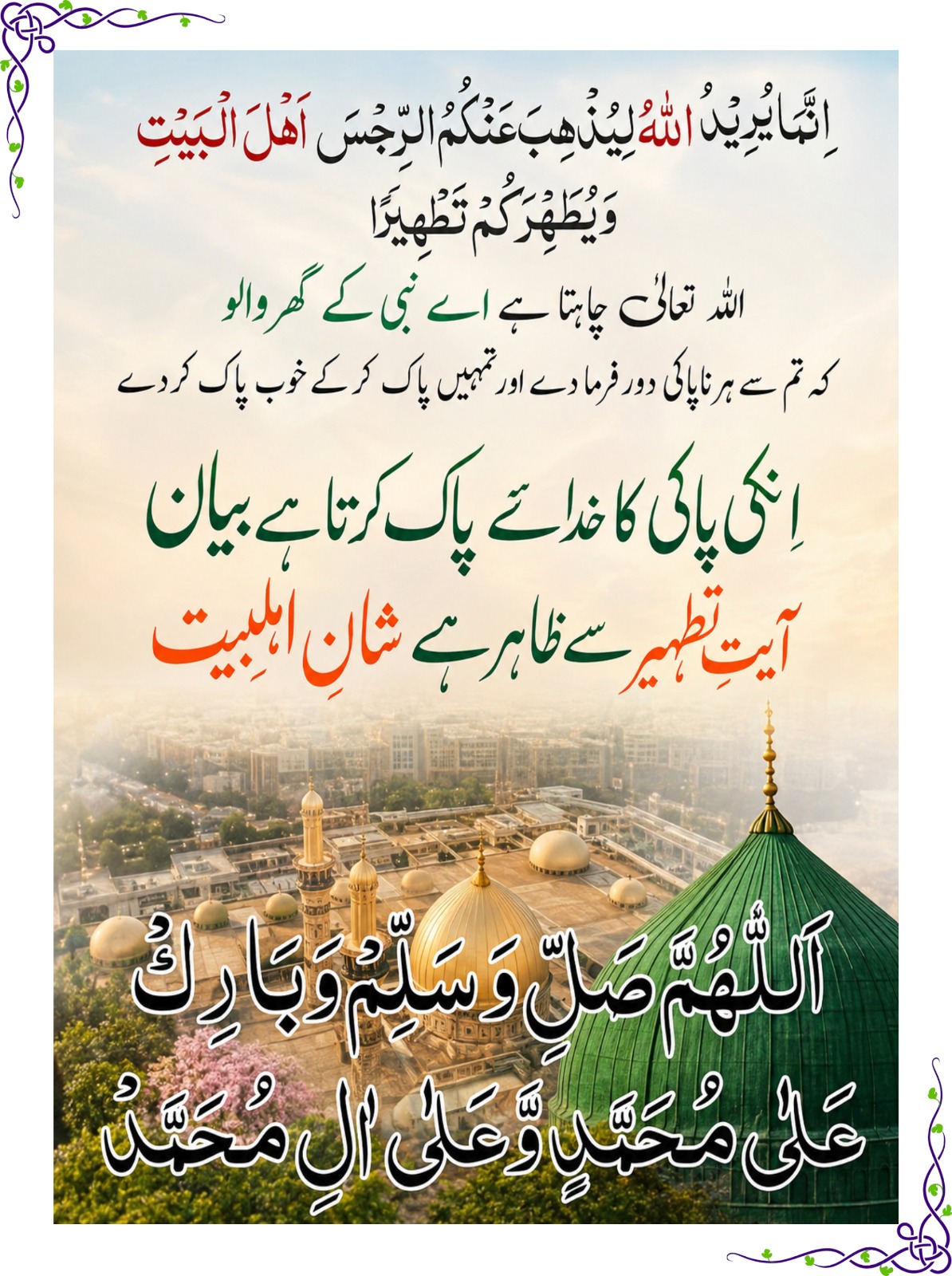
آیتِ تطہیر
Allah describes the purity of Ahl al-Bayt
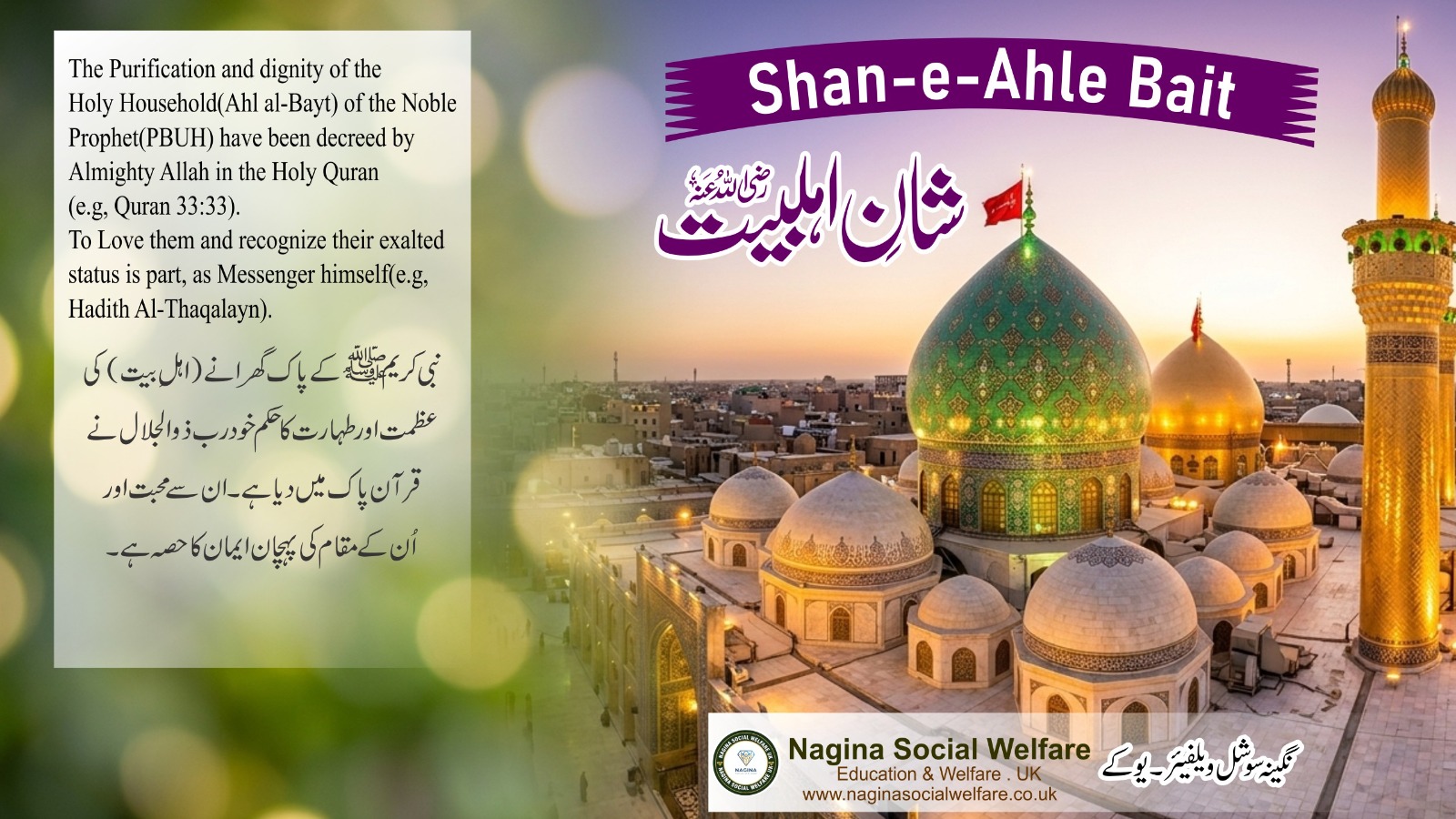
شانِ اہل بیت
Greatness of the Ahl al-Bayt in Quran and Hadith
01
Defining the Ahl al-Bayt in Sunni Creed
According to the consensus of the scholars of Ahl al-Sunnah wa’l-Jamā‘ah, the term Ahl al-Bayt encompasses:
The Noble Wives (Ummahāt al-Mu’minīn)
Led by Sayyidah Khadījah al-Kubrā and Sayyidah ‘Ā’ishah al-Siddīqah (may Allah be pleased with them all).
The Blessed Cloak (Ahl al-Kisā’)
Sayyidatunā Fāṭimah al-Zahrā’, Sayyidunā ‘Alī al-Murtaḍā, Sayyidunā al-Ḥasan, and Sayyidunā al-Ḥusayn (may Allah be pleased with them all).
The Pious Lineage (Banū Hāshim)
The believers among the progeny of Sayyidunā ‘Abbās, Sayyidunā Ja‘far, Sayyidunā ‘Aqīl, and their descendants.
Sunni doctrine beautifully harmonizes deep love for the Prophet’s Household with immense respect for all his illustrious Companions (Ṣaḥābah), viewing no contradiction between the two.
02
Status of Ahl al-Bayt in the Holy Quran
The Holy Quran explicitly mentions the elevated standing and spiritual purity of the Prophet’s Household across several verses.
A. The Verse of Purification (Āyat al-Taṭhīr)
Quran 33:33
“Allah only intends to remove all uncleanliness from you, O members of the Household [of the Prophet ﷺ], and to purify you thoroughly.”
Scholars emphasize that this verse establishes both the divine purification granted to the wives of the Prophet ﷺ (as mentioned in the preceding and succeeding verses) and to the Ahl al-Kisā’ whom the Prophet ﷺ wrapped under his cloak.
B. The Verse of Affection (Āyat al-Mawaddah)
Allah commands His Messenger ﷺ to state:
Quran 42:23
“Say [O Prophet], “I do not ask you for any reward for this [message] except affection for [my] close relatives.””
Commentators of the Holy Quran note that loving the noble family of the Holy Prophet ﷺ is a religious duty bound upon every believer as a gesture of gratitude for the guidance brought by the Prophet ﷺ.
03
Virtues of Ahl al-Bayt in Hadith Literature
The authentic traditions (Aḥādīth) recorded in primary Sunni canonical texts detail the immense rank of the Household of the Prophet ﷺ.
A. Hadith al-Thaqalayn (The Instruction of Revering Ahl al-Bayt)
In Ṣaḥīḥ Muslim, Sayyidunā Zayd ibn Arqam (may Allah be pleased with him) reported that the Messenger of Allah ﷺ delivered a sermon at the pool of Khumm, stating:
Hadith Sharif
“O people! I am only a human being. Soon a messenger (of death) from my Lord will come, and I will respond. I am leaving among you two weighty things: the first is the Book of Allah, containing guidance and light… and the members of my Household. I remind you, in the name of Allah, regarding my Household! I remind you, in the name of Allah, regarding my Household!”
B. Hadith al-Kisā’ (The Event of the Cloak)
Sayyidah ‘Ā’ishah (may Allah be pleased with her) narrated:
Hadith Sharif
“The Prophet ﷺ went out one morning wearing a striped cloak of black camel hair. Then al-Ḥasan ibn ‘Alī came and he covered him under it; then al-Ḥusayn came and entered with him; then Fāṭimah came and he took her in; then ‘Alī came and he took him in. He then recited: “Allah only intends to remove all uncleanliness from you, O members of the Household, and to purify you thoroughly.””
C. The Supreme Rank of Sayyidah Fāṭimah
The Prophet ﷺ explicitly highlighted the lofty status of his beloved daughter:
Hadith Sharif
“Fāṭimah is a part of me; whoever angers her angers me.”
Hadith Sharif
“Fāṭimah is the leader of the women of Paradise.”
D. The Masters of the Youths of Paradise
Regarding his blessed grandsons, Sayyidunā al-Ḥasan and Sayyidunā al-Ḥusayn, the Holy Prophet ﷺ declared:
Hadith Sharif
“Al-Ḥasan and al-Ḥusayn are the leaders of the youth of Paradise.”
04
Love for Ahl al-Bayt in Daily Worship
The love for the Prophet’s family is intertwined with daily Islamic practice. In every formal prayer (Salah), Muslims recite the Abrahamic salutation (Durood Ibrahim / Salawat Ibrahimiyyah):
Abrahamic Salutation (Durood Ibrahim)
“O Allah, send peace upon Muhammad and upon the Family of Muhammad, as You sent peace upon Abraham and upon the family of Abraham…”
Without invoking blessings upon the Āl (Family) of the Prophet ﷺ, the daily supplications remain incomplete, emphasizing their enduring spiritual importance.
05
Summary of the Sunni Creed (Ahl al-Sunnah)
The stance of Ahl al-Sunnah wa’l-Jamā‘ah regarding the Ahl al-Bayt is balanced, authentic, and rooted in the Sunnah:
Affection and Loyalty (Mawaddah & Wilāyah): Loving the family of the Prophet ﷺ is an obligation (Farḍ) upon every Muslim.
Balanced Reverence: Sunni Islam maintains deep veneration for the Ahl al-Bayt while avoiding any theological exaggeration (Ghuluw) that contradicts basic Islamic monotheism (Tawḥīd).
Unity of Love: Sunni doctrine holds that genuine love for the Prophet ﷺ necessitates loving both his holy family (Ahl al-Bayt) and his noble companions (Ṣaḥābah), viewing them as complementary pillars of the Islamic legacy.